The virtual EMR behind a resuscitation game by ER doctors
A simulation platform that trains emergency clinicians to manage the cognitive load of a multi-patient resuscitation.

Rapid Sequence was created by two emergency physicians, Dr. Sara Crager of UCLA and Dr. Ryan Ernst of the University of Utah, to teach what the textbooks cannot: managing high cognitive load during a multi-patient resuscitation, mental models for complex pathophysiology, and the cognitive strategies for solving problems in critically ill patients.
- UX/UI Strategy
- Product Design
- Web Application Development
- Custom Game Engine
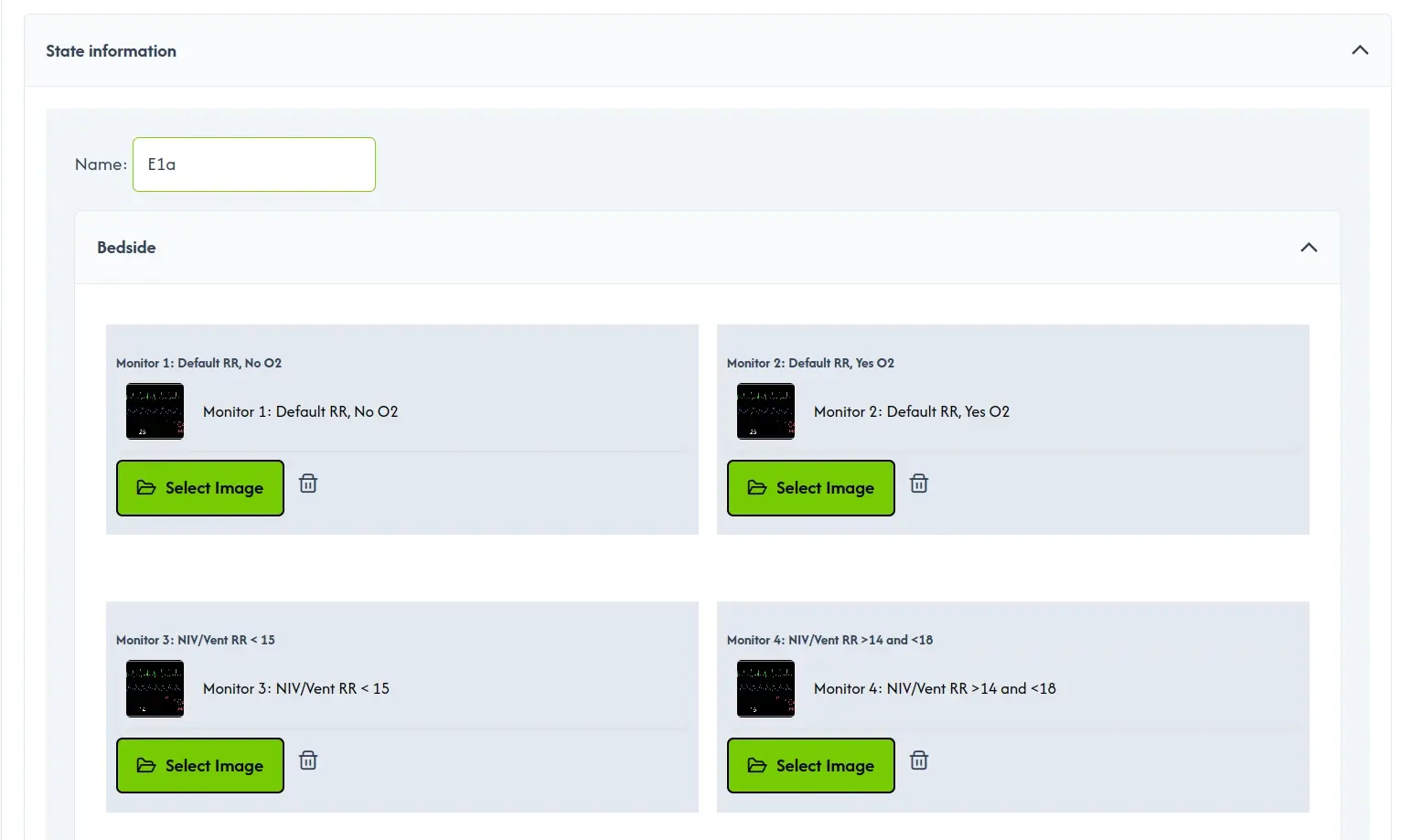
- Case Authoring Interface
- E-commerce
- Integration with Existing Sites
01
Medical education product design
Built with two emergency physicians
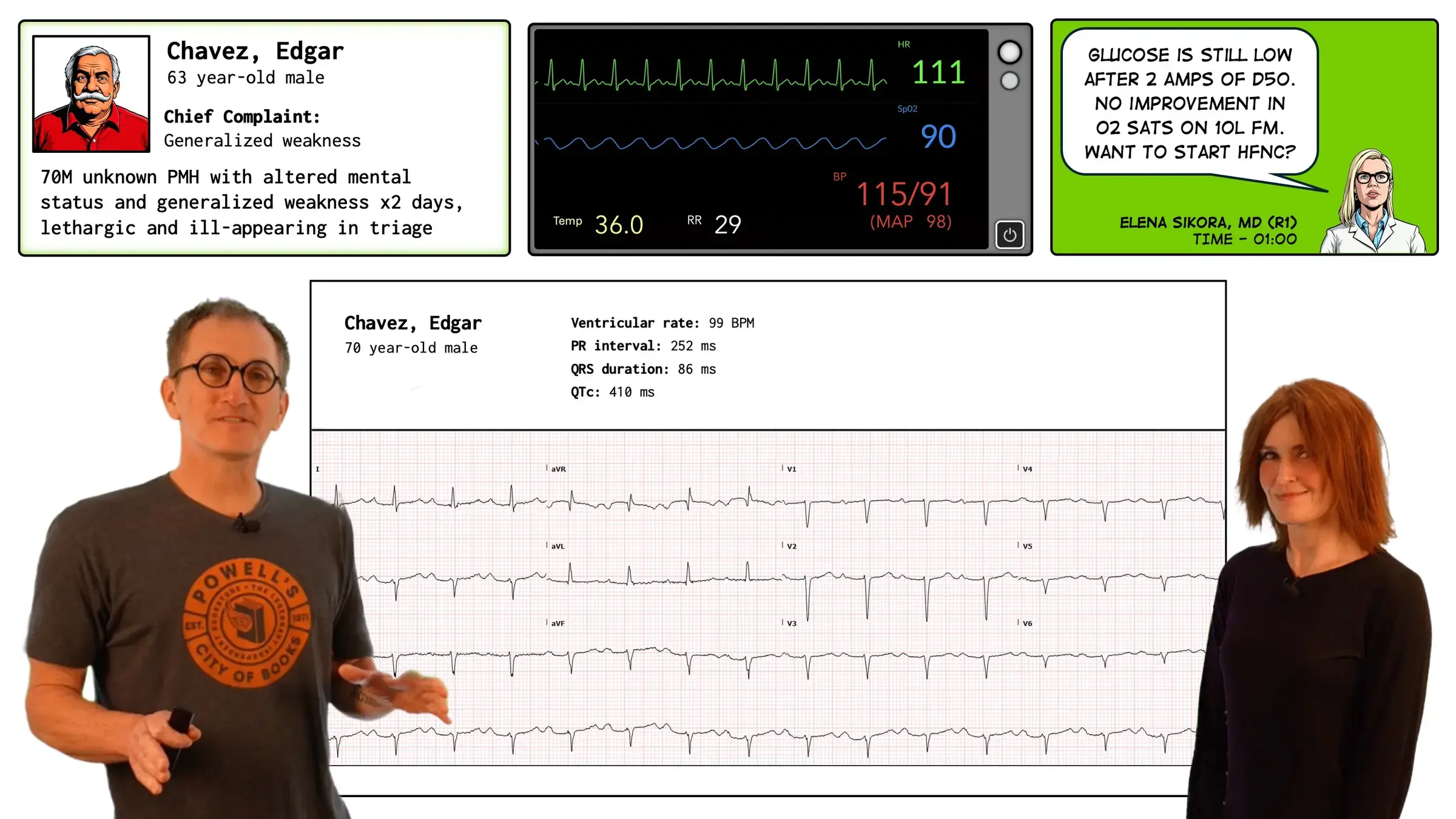
Dr. Sara Crager and Dr. Ryan Ernst wanted to teach what textbooks cannot: holding a multi-patient resuscitation in your head. The game needed a record realistic enough to think in, and one they could keep adding cases to without us.
02
Virtual EMR simulation
A virtual EMR realistic enough to think in
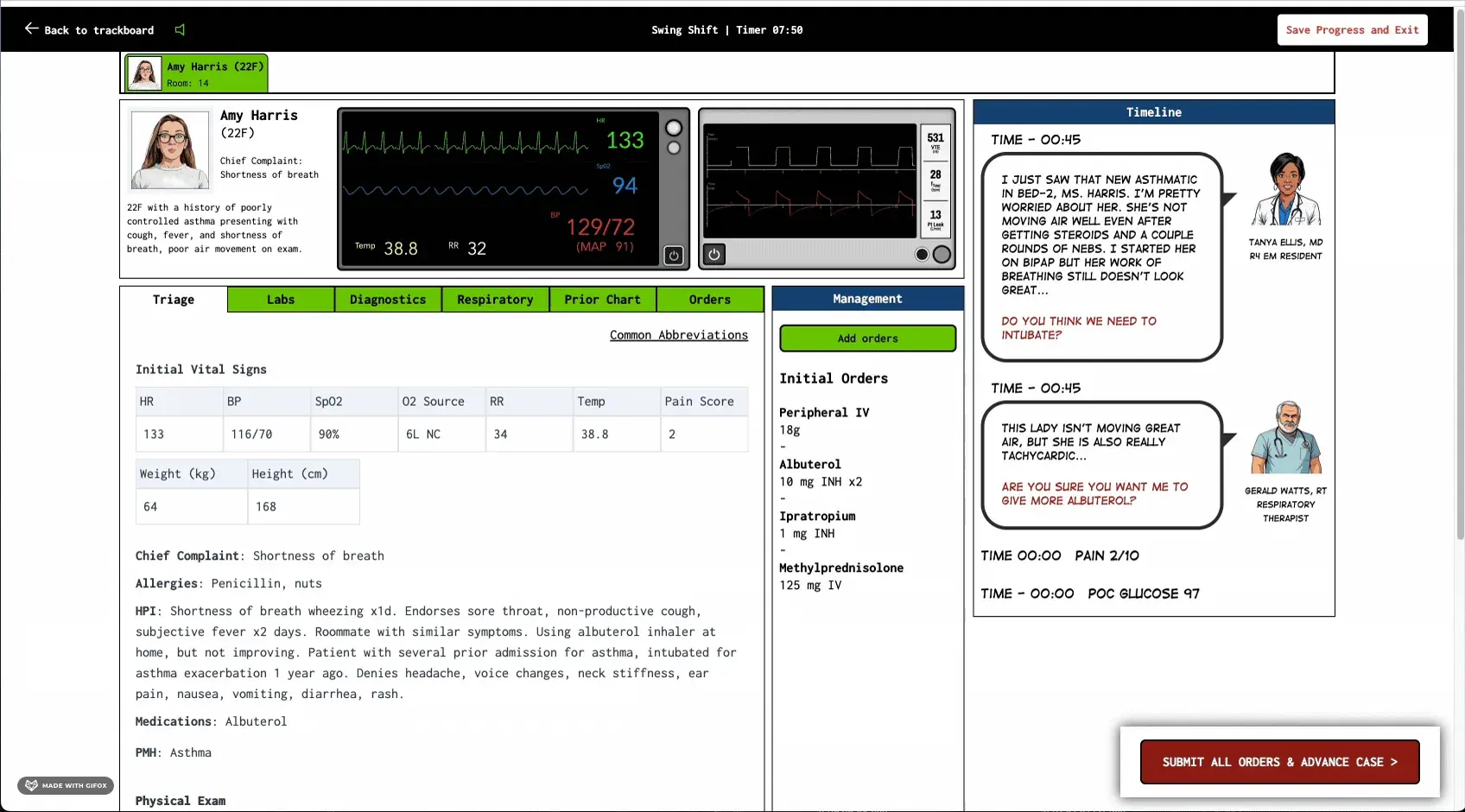
Every case is played through the record, the way a real shift is: a patient record to gather information from, outcomes that follow from what the resident does, and the teaching videos that close each case.
03
Clinical order entry UX
Orders, not multiple choice
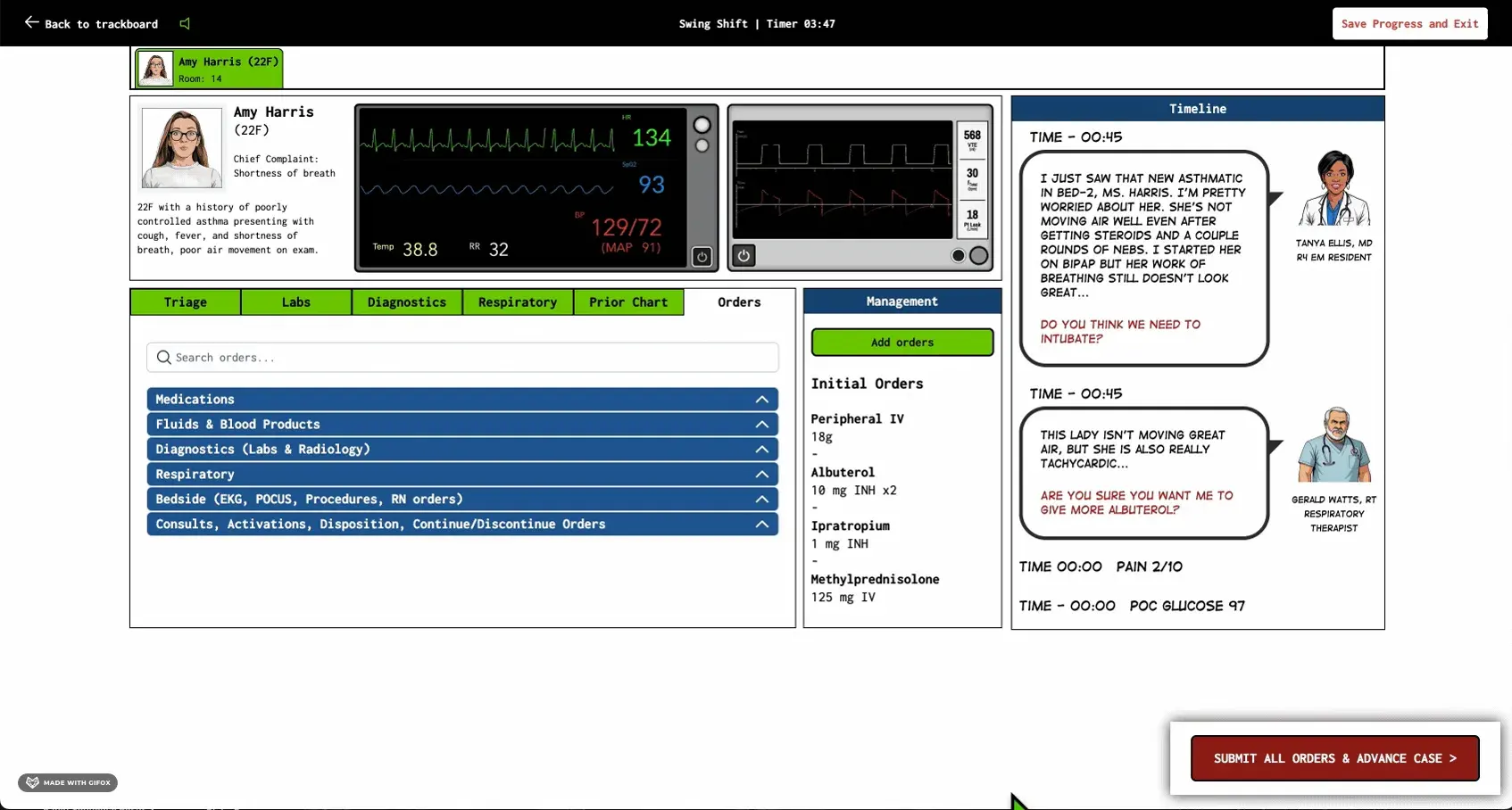
Nothing is multiple choice. Residents order from a full, real-world order set, and free-text orders cover anything beyond it, so they can order whatever they would on a real shift, and live with what follows.
04
Custom game engine development
A game engine of our own
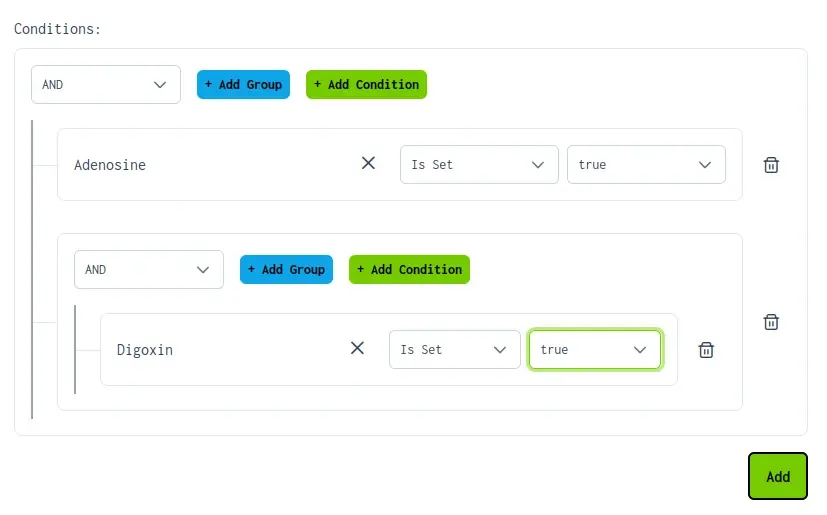
Under the EMR runs a game engine we built for it. Each case is a state machine, and the resident's orders decide where the patient goes next. Every choice is scored and recorded for the debrief.
The same engine runs live rooms, where an educator leads a whole class through a shift in real time. It's built on Nuxt and NestJS, with PostgreSQL, Redis and Socket.IO underneath.
05
Case authoring CMS & e-commerce
Cases the physicians write themselves
The physicians author cases themselves in a visual editor, setting what the patient shows and how each state answers the orders, so the library keeps growing without a developer. E-commerce lets individuals and whole programs join, and the platform plugs into the sites Rapid Sequence already ran.
Outcome
An online virtual EMR as the foundation for gamified resuscitation teaching, built so the clinicians who created it can keep adding cases without us.

“All of the stated goals were delivered on time, and they were always available and responsive. ActiveColor took active ownership and interest in helping us bring to life our somewhat challenging and complex vision.”
- Client
- Coffee Walk Inc
- Scope
- UX/UI DesignWeb AppVirtual EMRE-commerce